The Ultimate Guide to Choosing the Best Door Lock for Home Security
Posted by Steven on January 08, 2026
Why Choosing the Right Door Lock Matters for Home Security
If you value your safety, your family, and your possessions, it's important to take every step possible to burglar-proof your home. One of the simplest and most effective ways to enhance home security is to choose the right door lock.
At Home Improvement Supply, we offer a wide variety of locks in different security grades, styles, and finishes. This guide will help you understand how to choose the best residential lock for your needs.
Understanding Door Lock Security Grades (ANSI Ratings Explained)
The American National Standards Institute (ANSI) assigns locks a security grade based on durability and resistance to forced entry. There are three ANSI grades:
- Grade 1 – Highest security level. Common in commercial settings or high-security residential applications.
- Grade 2 – Moderate security. A good middle-ground option—less secure than Grade 1 but more affordable.
- Grade 3 – Basic security. Suitable for interior doors or areas with minimal security concerns.
In general, higher security equals higher cost, so choosing the right grade depends on your security needs and budget.
Key Factors to Consider Before Buying a Door Lock
1. Door Type and Material
Make sure your lock is compatible with your door's thickness, material, and existing hardware or cutouts. Installing a lock that's not designed for your door can compromise both function and security.
2. Your Budget
Lock prices vary from budget-friendly models to premium, high-security options. While it's tempting to save money, remember that a quality lock is a long-term investment in your safety.
3. Installation Difficulty
Higher-grade or electronic locks may require professional installation. If you're not comfortable with DIY installations, hiring a professional may be worth the cost. Brands like LockeyUSA provide detailed instructions, making the process easier even for more complex locks.
Types of Door Locks for Homes: Which One Is Right for You?
Choosing the right type of lock depends on the level of security you need and your personal preferences. Below are the most common types of residential locks:
Key-in-Knob Locks
Also known as tubular locks, these are among the most basic options. They operate with a key on the outside and a button or thumb turn on the inside. While convenient and easy to install, they don’t offer strong security on their own and should be paired with a deadbolt.
Deadbolt Locks
Deadbolts are among the most secure locking mechanisms for exterior doors. They feature a solid metal bolt that extends deep into the door frame, making forced entry more difficult.
- Single Cylinder Deadbolt: Keyed on the outside, thumb turn on the inside.
- Double Cylinder Deadbolt: Requires a key on both sides. Ideal for doors with glass panels, as it prevents intruders from unlocking the door by breaking the glass.
Entry Door Handlesets
Handlesets combine a tubular latch and a deadbolt, offering both style and security. They typically have a thumb latch instead of a round knob. Some models include a keyed thumb latch, but most rely on a separate keyed deadbolt for security.
Mortise Locks
Mortise locks house both the latch and deadbolt in a single, rectangular unit recessed into the door edge. They offer superior durability and security, but are more expensive and typically require professional installation.
Electronic Locks
For keyless entry, electronic locks use keypads with changeable combinations. Most are battery-operated and may include a key override as a backup. They eliminate the hassle of fumbling for keys, especially in bad weather.
LockeyUSA offers reliable mechanical keyless locks that work without batteries, wires, or electricity, making them ideal for users who prefer a low-maintenance solution.
Where to Install High-Security Locks in Your Home
The location of the door should determine the type of lock you use:
- Front Door: Requires the highest level of security since it’s the main entry point.
- Back and Patio Doors: Should be equipped with strong locks, as they are common targets for break-ins.
- Interior Doors (like bedrooms or bathrooms): Don’t require high-security locks and can use simpler mechanisms like privacy knobs or levers.
Best Lubricants for Door Locks: What to Use and What to Avoid
Over time, locks can accumulate dirt and moisture, leading to stiffness or corrosion. Regular lubrication helps maintain smooth operation and extend the life of your lock.
- Best long-term option: Silicone-based lubricant, which repels dirt and moisture.
- Temporary fix: Products like WD-40 can loosen a stuck lock but aren’t ideal for long-term use, as oil-based lubricants tend to attract dirt.
Best Door Locks by Scenerio
- Apartment Front Door: Single-cylinder deadbolt + reinforced strike plate
- House with Glass Panel Door: Double-cylinder deadbolt (or laminated glass alternative)
- Homes with Kids: Keyless entry with auto-lock
- Elderly Homeowners: Smart lock with keypad + auto-lock
- Rental Property: Keyless lock with code reset feature
How to Choose a Lock in 60 Seconds
Quick Decision Tool Checklist:
- Is this your main entrance? - Deadbolt required
- Is there glass near the handle? - Double-cylinder or reinforced glass
- Hate carrying keys? - Smart Lock
- Tight Budget? - Grade 2 deadbolt
- Weak Door Frame? - Upgrade strike plate + 3 inch screws
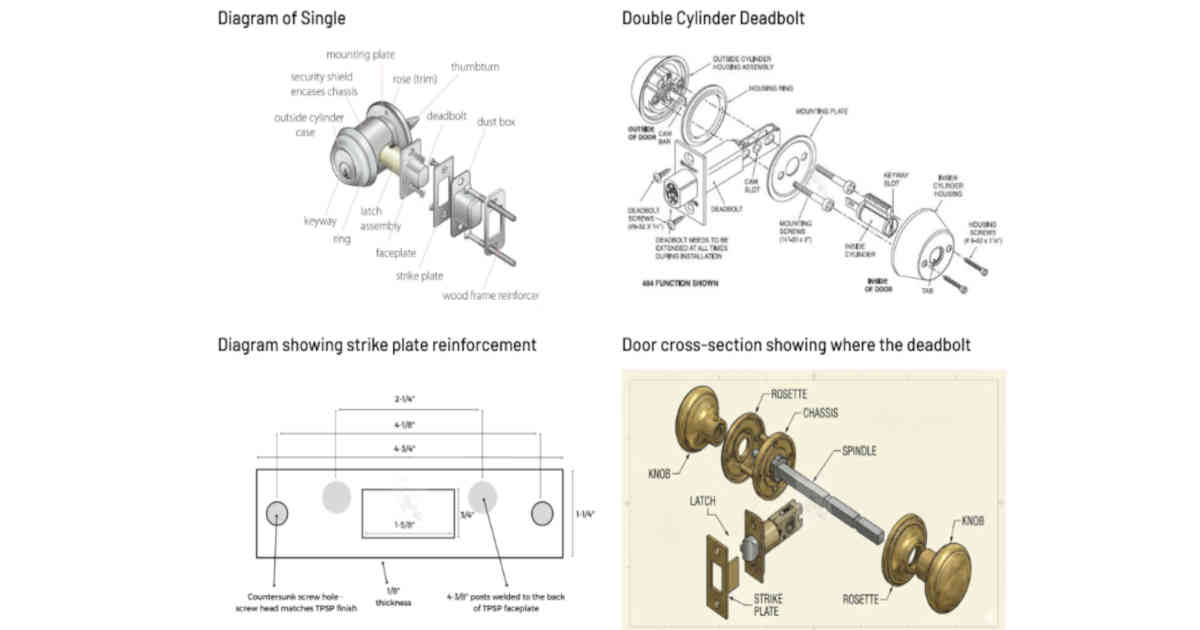
Visual Aid of Different Locks
Below is a breakdown of the different types of locks and how they are designed.
Conclusion
Choosing the right door lock is a crucial step in protecting your home, your loved ones, and your belongings. Start by identifying which entry points need the highest level of security, then consider the type of door, your budget, and your comfort level with installation. Whether you opt for a high-grade deadbolt, a stylish handleset, or a modern keyless lock, investing in the right lock offers long-term peace of mind. With the right information and the right products, securing your home can be both effective and affordable.